Categories
Tutorial

Weekend baking- peanut butter cups

While we were in Florida, I picked up a whole new load of candy making stuff- mostly Wilton. Actually, I think all of it was Wilton!

I got peanut butter flavour and dark chocolate candy melts, a new candy mould, some squeezy bottle things, and some decorating brushes. Making peanut butter cups meant I got to use EVERYTHING.

The squeezy bottle things say you can half fill them with Candy Melts, then place the bottle in a bowl of hot water until they melt. Well yeah, sure, that sounds simple enough. Except the bottles are still light and half full of air, so the just float- you end up having to hold the bottle in the water! And then, (because you’re trying to keep it so the water can’t get in) all the melted candy is at the bottom, and it takes aaages to work its way to the nozzle when you’re ready to start, by which time it’s cooled a bit and is reluctant to come out. Bah. Bah!!

I squidged a little melted dark chocolate into the bottom on the mould and then used the little brush to make sure the sides were covered. This bit was a lot easier to do with the brush, however because the choc had cooled a bit, by the time I’d done half a dozen cups the brush was basically a stick with a lump of chocolate on. But I got there. Guess which one I did last:

While these were cooling, I got on with melting the peanut butter candy filling. After the first attempt, I modified my method slightly, and left the bottle to rest like this:

It still took a while, but at least I could leave it where it was for a bit. You do have to keep sqidging the bottle a bit to make sure it’s melting right the way through.

Anyway, onto filling the cups. This took a lot longer than the old dolloping-in-with-a-spoon method, and in the end I gave up and reverted back to my old ways- which were quicker, but a heck of a lot messier!

Phew. Nearly done. After the filling had set, I smoothed more melted chocolate over the base to seal, and once that had set they were done and ready to be turned out into pretty little cases:

YUM. Worth the effort!

Categories
Craft Tutorial

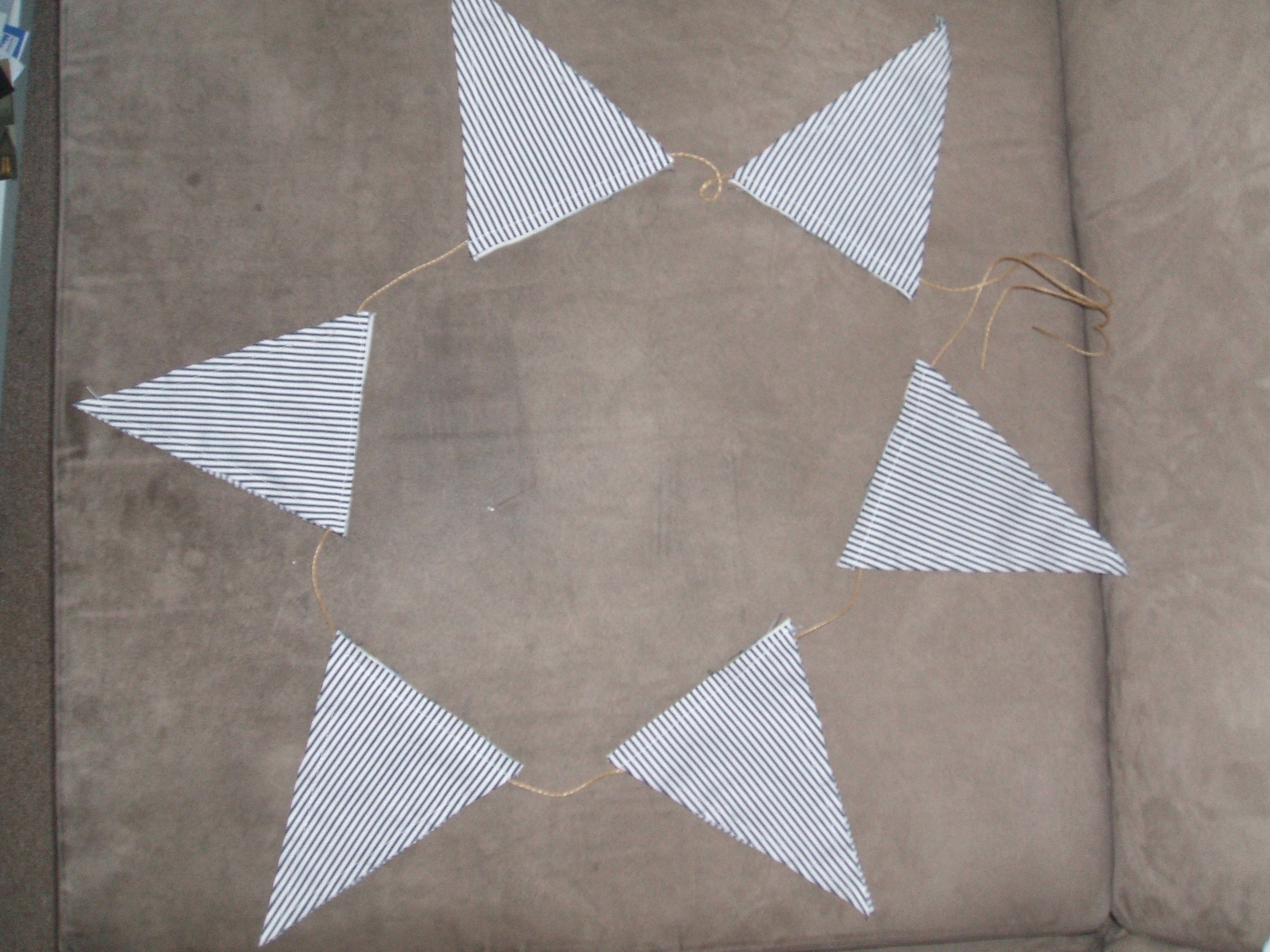
Oscar’s Bunting

The arrival of a new nephew last October prompted me to attempt some proper bunting. Just over 3 months later and it’s done! I got the Kirstie’s Homemade book for Christmas, which helped a lot- I mainly followed those instructions.

Shopping list:

  • Material
  • Cardboard
  • Ruler
  • Scissors
  • Spray Starch
  • Sewing machine/the patience to sew by hand
  • Cord or something to thread your flags on

The first thing you’ll need, of course, is material. A few years ago I bought what I thought at the time to be a lovely pair of blue and white striped trousers (£5, Mango, bargain). They went into my wardrobe and there they stayed until about two weeks ago, when I began cutting triangles from them. The bunting in the book was made from vintage fabric, with plain fabric for the backing. As I had plenty of the material I was using, I used that for everything, opting for horizontal striped one side and vertical on the other.

Now, you’re supposed to spray starch your fabric and iron beforecutting the triangles out, but I got carried away and ended up ironing each triangle separately afterwards. It was fine though!

You want the triangles to be even and matching in size; other than that, I really think it depends what you want the bunting for and ultimately how big you want it! Cut yourself a template from cardboard. Mine was roughly 18cm x 12cm. Then use it to cut triangles from your material; again, it really depends how much bunting you want. You can figure it out by the length of triangle tops and how much space you think you’ll be leaving in between.

Next job is putting a front with a back and sewing them together. If you’re going for a shabby chic look (as I usually am) then sew them with the backs together. If you like neat, you can sew them right sides together then turn them right way out- just make sure you don’t sew the short side beforehand!

So… where was I… sewing. Do up each of the long sides, meeting at the point, but stopping a good few centimetres from the top. (If you’re being  neat, this is the point you’d turn it right way out). Then sew across the top of the short side, so you’ve got a gap between this and the side seams; this is where you’ll thread your cord through.

Now it’s time to string them all together! I used thin rope type stuff, that I found in my craft box. I’ve no idea where it came from, I’m afraid, but I thought it looked nice. I used a big blunt needle to thread mine through. Another way is to wrap tape round the end, so it doesn’t fray and can be pushed through easier. Just make sure they don’t all fall off the other end!

All that’s left to do then is decide how far apart you want them, the put a couple of little stitches in each to hold them in place.